.avif)
₹1,024 crore in productive assets belonging to Goa iron ore mining groups are now frozen immovable properties across two jurisdictions and equity stakes in Indian companies immobilised as of 19 June 2026 and every active miner, trader, or financier with historical exposure to Goa ore flows between 2007 and 2012 faces residual compliance risk that this single enforcement action does not extinguish.
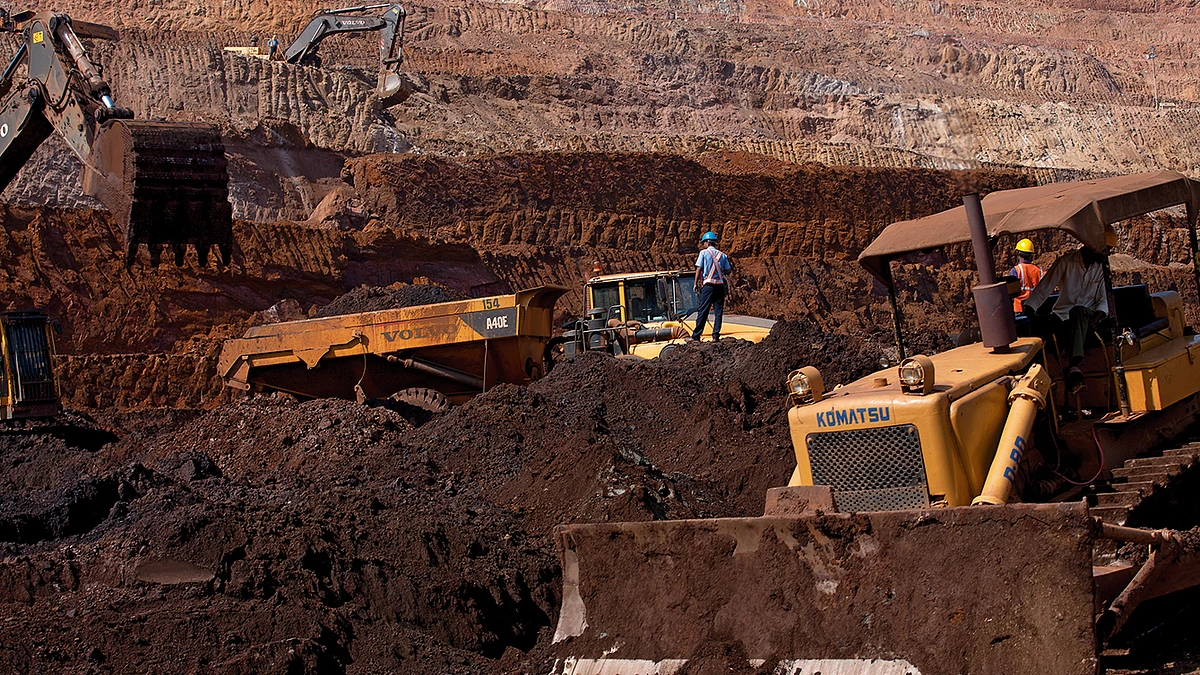
The Enforcement Directorate (ED) India's financial crimes agency, empowered under the Prevention of Money Laundering Act (PMLA) to provisionally seize assets linked to alleged criminal proceeds attached ₹1,023.85 crore in assets connected to the Salgaocar Group and its associates, the AVS Group, on 19 June 2026. The attachment covers 99 immovable properties in India (₹459.10 crore), 31 immovable properties in Singapore (₹471.32 crore), and equity shares in Indian companies (₹93.42 crore). A provisional attachment under PMLA is not a conviction; it is a temporary freeze, subject to challenge before the Adjudicating Authority a tribunal that reviews whether the seizure is legally sustained within 180 days. But it is operationally severe: attached assets cannot be sold, mortgaged, or used as collateral, impairing group liquidity immediately. The underlying investigation, triggered by a Goa Crime Branch CID (Criminal Investigation Department) FIR, alleges that between 2007 and 2012 the AVS Group operated ten mining leases in Goa and exported iron ore at prices well below market value to shell entities companies with no substantive operations, used solely to hold assets or pass through funds registered in the British Virgin Islands (BVI). Those shells then resold the ore to buyers in China at market prices, with the ED alleging that the resulting margin was laundered back through Singapore-based entities and ultimately used to acquire the very assets now frozen.
The numbers the ED cites deserve close attention, because they define the compliance perimeter for every operator still active in Indian iron ore. According to the agency, the scheme generated ₹2,492.95 crore from illegal extraction, sale, and export of iron ore ore mined from leases that the Supreme Court subsequently ruled were operating without lawful authority after 22 November 2007, until fresh leases were granted post-2018. A further ₹2,744.89 crore in alleged proceeds derived from the offshore resale margin: the difference between the artificially low export invoice price and the actual price realised when BVI shells sold to Chinese steel mills. Together, the ED puts total alleged proceeds of crime at ₹5,237.84 crore (approximately $628 million at current exchange rates). Consider what that offshore margin calculation means structurally. If a cargo of 60,000 tonnes of iron ore fines a standard Supramax vessel load was invoiced at $30/tonne to a BVI entity that then sold it at $80/tonne to a Chinese buyer, the $50/tonne gap, multiplied across years of shipments, becomes the ED's definition of laundered proceeds. It is not only the miner's extraction margin under scrutiny. It is every step in the trade chain.
For active iron ore miners particularly those holding Goa leases granted after the Supreme Court's reinstatement orders the immediate question is counterparty and documentation hygiene. On the sell side, a mid-sized Goa iron ore exporter currently shipping to East Asian buyers through an intermediary trading house should verify, now, that no entity in their current offtake chain has ownership or management continuity with BVI or Singapore structures that handled Goa ore pre-2018. The ED's expansive reading of PMLA tracing proceeds not just to the point of extraction but through every resale transaction means that a trader who purchased ore from an AVS-linked entity in 2010 and reinvested those profits into a current business could theoretically face proceeds-of-crime exposure, even absent direct involvement in the original scheme. On the buy side, Chinese steel mills and other Asian buyers of Indian iron ore face no direct PMLA exposure PMLA is Indian domestic law but their trading counterparties operating through Indian or Singapore entities do. Any buyer whose supplier is currently subject to ED investigation or asset attachment faces supply disruption risk, not legal risk, and should be reviewing alternative sourcing from Odisha or Karnataka exporters not linked to the Goa 2007–2012 lease period.
For large integrated trading houses a Trafigura, a MMTC, or a national steel company's trading arm with legal and compliance infrastructure, the practical step is commissioning a forensic counterparty trace: identifying whether any current supplier, logistics partner, or financing bank has documented links to the named entities. This is now a standard Know Your Counterparty (KYC) exercise in the Indian mining sector, and the cost of getting it wrong asset freeze, correspondent banking disruption, reputational damage substantially exceeds the cost of the review. For smaller regional operators an independent iron ore trader in Goa's Mormugao port corridor, or a mid-sized steel mill in Gujarat sourcing Indian ore without in-house legal capacity, the practical equivalent is requesting a clean-title confirmation and beneficial ownership disclosure from every Indian supplier, specifically covering the 2007–2018 window. The signal to watch is the Adjudicating Authority's ruling on the provisional attachment, which must come within 180 days of the 19 June 2026 order by approximately mid-December 2026. If the Authority sustains the attachment, the ED's offshore-margin theory of proceeds of crime becomes judicially anchored, and the compliance perimeter for every historical Goa ore trade participant widens materially.
'%3e%3cg id='Final-Copy-2_2_' transform='translate(1275.000000, 200.000000)'%3e%3cpath class='st0' d='M7.4,12.8h6.8l3.1-11.6H7.4C4.2,1.2,1.6,3.8,1.6,7S4.2,12.8,7.4,12.8z'/%3e%3c/g%3e%3c/g%3e%3c/g%3e%3cg id='final---dec.11-2020'%3e%3cg id='_x30_208-our-toggle' transform='translate(-1275.000000, -200.000000)'%3e%3cg id='Final-Copy-2' transform='translate(1275.000000, 200.000000)'%3e%3cpath class='st1' d='M22.6,0H7.4c-3.9,0-7,3.1-7,7s3.1,7,7,7h15.2c3.9,0,7-3.1,7-7S26.4,0,22.6,0z M1.6,7c0-3.2,2.6-5.8,5.8-5.8 h9.9l-3.1,11.6H7.4C4.2,12.8,1.6,10.2,1.6,7z'/%3e%3cpath id='x' class='st2' d='M24.6,4c0.2,0.2,0.2,0.6,0,0.8l0,0L22.5,7l2.2,2.2c0.2,0.2,0.2,0.6,0,0.8c-0.2,0.2-0.6,0.2-0.8,0 l0,0l-2.2-2.2L19.5,10c-0.2,0.2-0.6,0.2-0.8,0c-0.2-0.2-0.2-0.6,0-0.8l0,0L20.8,7l-2.2-2.2c-0.2-0.2-0.2-0.6,0-0.8 c0.2-0.2,0.6-0.2,0.8,0l0,0l2.2,2.2L23.8,4C24,3.8,24.4,3.8,24.6,4z'/%3e%3cpath id='y' class='st3' d='M12.7,4.1c0.2,0.2,0.3,0.6,0.1,0.8l0,0L8.6,9.8C8.5,9.9,8.4,10,8.3,10c-0.2,0.1-0.5,0.1-0.7-0.1l0,0 L5.4,7.7c-0.2-0.2-0.2-0.6,0-0.8c0.2-0.2,0.6-0.2,0.8,0l0,0L8,8.6l3.8-4.5C12,3.9,12.4,3.9,12.7,4.1z'/%3e%3c/g%3e%3c/g%3e%3c/g%3e%3c/g%3e%3c/svg%3e) Privacy Choices
Privacy Choices