.avif)
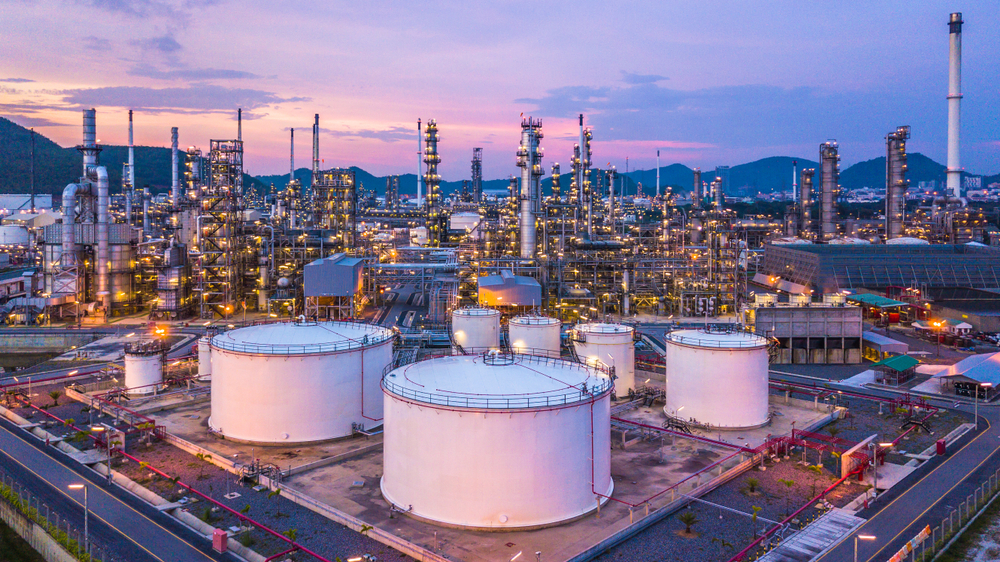
Asian crude oil refiners are absorbing an estimated $3–8 per barrel in additional landed costs on Gulf-origin crude, effective immediately, as the combination of war-risk insurance surcharges, transit fee uncertainty in the Strait of Hormuz, and Cape of Good Hope rerouting costs compounds into a margin compression of $2–5 per barrel on refinery cracking spreads the profit a refiner earns by converting crude into products like diesel and jet fuel.
A Reuters/Ipsos poll of 1,019 U.S. adults, conducted in mid-July 2026, found that 79% of respondents believe the United States is engaged in a protracted conflict with Iran up sharply from 65% in March. Sixty percent expect higher gasoline prices over the next year. These are not merely political sentiment data points. When embedded consumer expectations of sustained supply disruption reach this scale, they become a self-reinforcing commercial signal: term contract counterparties extend force majeure the legal clause that releases parties from obligations due to extraordinary events clauses, trade finance banks slow letter of credit confirmation timelines on Gulf-origin cargoes, and freight brokers begin pricing Cape of Good Hope diversions into standard voyage estimates rather than treating them as exceptions.
The immediate structural fault line is the Strait of Hormuz itself, according to reports, President Trump has announced a 20% cargo transit fee on all shipments transiting the strait as part of reinstating a blockade of Iranian shipping, with Senator Marco Rubio stating the U.S. will not permit Iran to impose its own passage fees. The legal and operational architecture for collecting a U.S.-imposed transit fee on non-U.S. flagged vessels or non-U.S. cargo owners does not currently exist. Iran disputes the blockade's legality under international maritime law. The fee, as of this writing, functions as headline deterrent rather than implemented cost but in commodity markets, uncertainty alone is sufficient to move prices and inflate risk premiums, even when the underlying mechanism is contested.
Consider the margin anatomy of a representative Hormuz-transit crude cargo. A VLCC a Very Large Crude Carrier, a supertanker capable of carrying approximately 2 million barrels loading in the UAE for delivery to a Japanese or South Korean refinery would, under normal conditions, carry a war-risk insurance premium of perhaps $0.10–0.20 per barrel. That premium has risen to an estimated $0.50–1.50 per barrel under current conditions. On a 2 million barrel cargo, the insurance surcharge alone adds $1–3 million per voyage. Add freight rate escalation on the Hormuz route where spot VLCC rates have tightened due to vessel availability constraints as owners weigh war-risk exposure and the total additional freight and insurance cost per voyage rises toward $4–6 million compared to the pre-conflict baseline. That cost lands directly on the cargo buyer, not the vessel operator.
On the sell side, Gulf crude exporters particularly Abu Dhabi National Oil Company (ADNOC) and Kuwait Petroleum Corporation, whose primary export terminals load directly into Hormuz transit routes face a narrowing buyer universe as Asian refiners begin seeking specification equivalent alternatives. Dubai crude, the Middle East benchmark against which Gulf barrels are typically priced, is under downward pressure relative to Brent the North Sea benchmark. The Brent-Dubai spread the price difference between these two markers is compressing as Asian buyers demand discounts to absorb the additional logistics cost of Gulf-origin barrels. A seller who was achieving Dubai plus $0.50/barrel six months ago is now being asked to price at Dubai minus $1.00 to $1.50 to make the economics work for an Asian refiner carrying the full landed-cost burden. On the buy side, South Korean and Japanese refiners operating on thin cracking margins already under pressure from weak regional product demand face a direct $2–5/barrel compression in refinery margin on every Gulf-origin barrel they process, at a time when forward cover through long-term term contracts provides limited protection against the insurance and transit-fee uncertainty component.
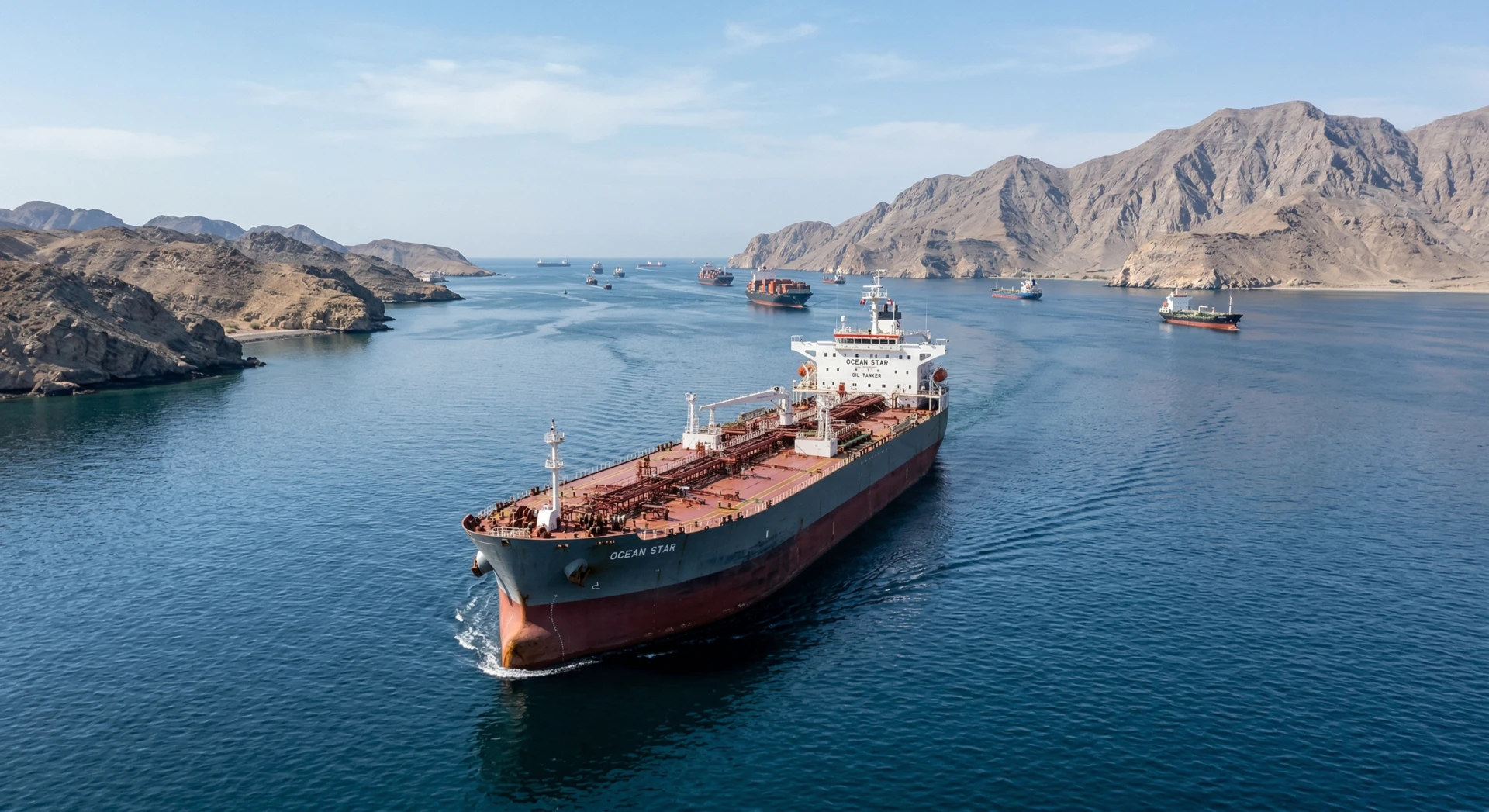
The Cape of Good Hope rerouting adds a quantifiable physical cost that is harder to hedge away. A VLCC that would normally transit Hormuz and reach a Japanese refinery in 20–25 days instead sails around the southern tip of Africa adding 15–22 days to the voyage. At current VLCC spot rates of approximately $35,000–45,000 per day, those additional days cost $525,000 to $990,000 in extra hire alone, before bunker fuel the heavy fuel oil that powers the vessel costs are added. A 20 day diversion at $40,000/day and standard bunker consumption adds roughly $1.20–1.80 per barrel in freight cost on the 2 million barrel cargo. For operators choosing this route to avoid transit fee exposure entirely particularly for Iranian origin or quasi-sanctioned barrels moving through ship to ship transfer operations outside the strait this cost is a deliberate commercial choice rather than an imposed one. The Cape route is not a crisis workaround; it is becoming a systematic alternative for price insensitive or sanctions conscious cargo owners.
For large integrated traders Trafigura, Vitol, or a national oil company's trading arm with access to derivatives markets the primary instrument right now is Brent-Dubai spread positioning. If a trader can source West African or North Sea crude of equivalent quality specification and deliver it into Asian markets currently paying Dubai-linked Gulf premiums plus war-risk surcharge, the effective arbitrage the profit from exploiting the price difference between two markets is approximately $2–4 per barrel on eligible cargoes, before logistics. These traders can also use freight derivatives known as Forward Freight Agreements contracts that lock in future shipping rates to hedge Cape rerouting costs on specific voyage windows. For smaller regional operators a mid-sized independent refiner in Southeast Asia, a regional fuel importer without derivatives desk access the practical equivalent is fixing freight terms bilaterally with vessel owners on time-charter arrangements, renting a vessel for a fixed period rather than per voyage, for 30–60 day periods, and diversifying crude sourcing toward non-Hormuz origins: West African, US Gulf Coast, or Kazakh Caspian barrels where supply chains do not require Hormuz transit.
The political dimension adds a structural uncertainty layer that crude oil traders should price into planning horizons. According to the polling data, 58% of Americans disapprove of U.S. strikes on Iran, 48% believe Middle East stability will worsen over the next year, and Trump's approval rating has reportedly hovered near the lowest levels of his political career since the conflict began creating pressure ahead of midterm elections that could alter the policy trajectory in either direction. Negotiations reportedly remain open, with approximately 60 more days of talks on an interim deal to reopen the strait but renewed hostilities and the contested transit-fee announcement have materially reduced the probability that any near-term ceasefire holds. The market should not price in a swift resolution. The last structurally comparable Hormuz disruption was the Iran-Iraq tanker war of the 1980s, during which freight rates tripled within weeks of each major attack and remained elevated for years. That episode also produced sustained demand destruction in oil-importing Asian economies a second-order effect, the indirect consequence that compounds over months rather than announcing itself immediately, that current forward curves are not yet pricing.
For observers seeking a single, time-bound monitoring signal: watch the Baltic Exchange's Dirty Tanker Route TD3C the benchmark freight rate for VLCC voyages from the Middle East Gulf to Japan on a weekly basis through the end of August 2026. If TD3C rises above $10/MT from its current elevated level, that is the market's confirmation that vessel operators are pricing in systematic Cape diversion as the base case rather than the exception. At that level, the freight cost alone exceeds the typical spot trading margin on a standard Hormuz-origin cargo meaning that for any operator without a structural hedge or a long-term freight fixture already in place, the economics of Gulf crude sourcing will have fundamentally changed, not temporarily disrupted.

.jpg)
.jpg)

'%3e%3cg id='Final-Copy-2_2_' transform='translate(1275.000000, 200.000000)'%3e%3cpath class='st0' d='M7.4,12.8h6.8l3.1-11.6H7.4C4.2,1.2,1.6,3.8,1.6,7S4.2,12.8,7.4,12.8z'/%3e%3c/g%3e%3c/g%3e%3c/g%3e%3cg id='final---dec.11-2020'%3e%3cg id='_x30_208-our-toggle' transform='translate(-1275.000000, -200.000000)'%3e%3cg id='Final-Copy-2' transform='translate(1275.000000, 200.000000)'%3e%3cpath class='st1' d='M22.6,0H7.4c-3.9,0-7,3.1-7,7s3.1,7,7,7h15.2c3.9,0,7-3.1,7-7S26.4,0,22.6,0z M1.6,7c0-3.2,2.6-5.8,5.8-5.8 h9.9l-3.1,11.6H7.4C4.2,12.8,1.6,10.2,1.6,7z'/%3e%3cpath id='x' class='st2' d='M24.6,4c0.2,0.2,0.2,0.6,0,0.8l0,0L22.5,7l2.2,2.2c0.2,0.2,0.2,0.6,0,0.8c-0.2,0.2-0.6,0.2-0.8,0 l0,0l-2.2-2.2L19.5,10c-0.2,0.2-0.6,0.2-0.8,0c-0.2-0.2-0.2-0.6,0-0.8l0,0L20.8,7l-2.2-2.2c-0.2-0.2-0.2-0.6,0-0.8 c0.2-0.2,0.6-0.2,0.8,0l0,0l2.2,2.2L23.8,4C24,3.8,24.4,3.8,24.6,4z'/%3e%3cpath id='y' class='st3' d='M12.7,4.1c0.2,0.2,0.3,0.6,0.1,0.8l0,0L8.6,9.8C8.5,9.9,8.4,10,8.3,10c-0.2,0.1-0.5,0.1-0.7-0.1l0,0 L5.4,7.7c-0.2-0.2-0.2-0.6,0-0.8c0.2-0.2,0.6-0.2,0.8,0l0,0L8,8.6l3.8-4.5C12,3.9,12.4,3.9,12.7,4.1z'/%3e%3c/g%3e%3c/g%3e%3c/g%3e%3c/g%3e%3c/svg%3e) Privacy Choices
Privacy Choices