.avif)
India's non-ferrous metal producers and consumers paying an estimated 15–25% premium over LME (London Metal Exchange, the global benchmark for base metals pricing) in effective input costs due to unhedged price exposure now have a formal institutional pathway toward exchange-traded risk management, though the commercial reality of that pathway depends on regulatory and product approvals that have not yet been confirmed.
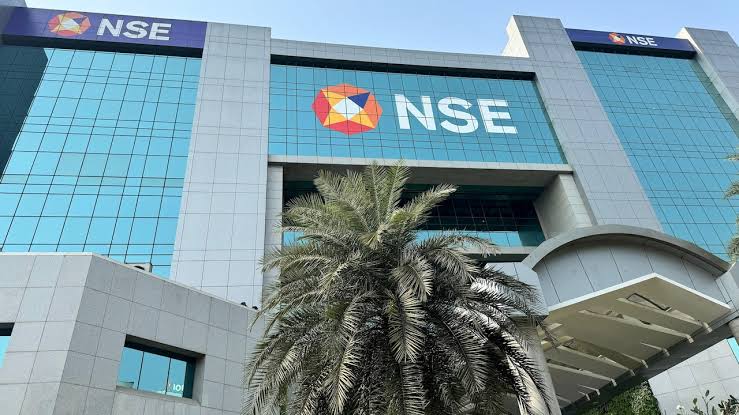
The NSE-BME partnership announced on 22 June 2026 joins two complementary institutions. NSE is India's largest derivatives exchange by volume, operating a market infrastructure clearing houses, margining systems, real-time surveillance that underpins equity, currency, and interest rate derivatives for millions of participants. BME, formerly Bombay Metal Exchange Ltd., brings more than nine decades of physical market relationships across the copper, aluminium, zinc, lead, and nickel trade. The MoU a memorandum of understanding, a non-binding agreement to cooperate toward defined goals commits both parties to jointly developing new derivative products and running industry education programmes. What it does not confirm is whether SEBI (the Securities and Exchange Board of India, the commodity derivatives regulator) has approved any specific contract for listing, or when such approval might come. That gap is the central commercial uncertainty for any operator trying to plan around this announcement.
To understand what is at stake, consider a mid-tier Indian copper wire manufacturer consuming 5,000 tonnes of copper per year. At current LME cash prices of approximately $9,800/tonne, that firm's annual copper bill is roughly $49 million. A 10% copper price swing not unusual; copper moved 18% in a single quarter in early 2024 creates a $4.9 million input cost variance. Without a hedging instrument, that variance falls directly onto operating margins. On the buy side, this is the core problem: procurement officers at Indian metal consumers are price-takers in a market they cannot hedge domestically at competitive cost, because the existing MCX (Multi Commodity Exchange) copper contract carries a basis risk the gap between MCX settlement prices and the physical prices at which Indian buyers actually transact that limits its effectiveness as a hedge. If NSE-BME contracts are structured with tighter physical alignment and deeper liquidity, that basis risk narrows, and the hedge becomes more protective. On the sell side, Indian copper and aluminium smelters and secondary producers face the mirror problem: they cannot efficiently lock in forward sale prices, leaving revenue forecasting exposed to the same volatility their customers face.
The participation gap is the structural obstacle this MoU must overcome, and ninety years of BME relationships valuable as they are for product design and market outreach do not automatically resolve it. SEBI regulations currently restrict foreign institutional participation in Indian commodity derivatives, which limits the pool of liquidity providers and arbitrageurs who would normally tighten bid-offer spreads (the gap between the price at which a buyer and seller can transact; narrower spreads mean cheaper hedging). For a large integrated operator a Hindalco or a Vedanta trading arm the firm likely already hedges on the LME in London, using forwards and options to lock in metal prices months ahead. The NSE-BME platform would be relevant only if domestic liquidity becomes deep enough to offer tighter spreads or more favourable margin terms than the LME. For a smaller regional operator a mid-sized zinc die-casting firm in Gujarat, an independent lead-acid battery component producer in Rajasthan derivatives access is currently out of reach not because the product does not exist on MCX, but because exchange-traded hedging requires margin capital (a cash deposit held against potential losses), treasury staff capable of managing positions, and credit lines from banks unfamiliar with commodity risk. The MoU's proposed awareness initiatives address the knowledge gap; they do not address the margin financing gap.
The commercial signal to watch is not the MoU itself but the sequence of regulatory and market milestones that would convert it into tradeable reality. The first threshold: SEBI contract approval for at least one NSE-BME non-ferrous derivative, which would confirm regulatory endorsement and allow a listing timeline to be set. The second threshold: open interest the total number of outstanding contracts held by market participants, a measure of market depth reaching 10,000 lots in any single contract within six months of listing, which would indicate genuine liquidity rather than thin, unworkable trading. MCX's experience is instructive: its copper contract took several years to develop the liquidity that made it consistently usable as a hedge, and it still carries basis risk that sophisticated users manage around. Observers should monitor SEBI's monthly commodity derivatives circular for contract approval notices, and track MCX copper open interest as the baseline against which any NSE-BME copper contract would need to compete. If NSE-BME open interest reaches parity with MCX within 18 months of listing, basis arbitrage between the two venues will compress spreads on both the one outcome that unambiguously benefits every Indian non-ferrous metal buyer and seller regardless of which exchange they use.
.jpg)


'%3e%3cg id='Final-Copy-2_2_' transform='translate(1275.000000, 200.000000)'%3e%3cpath class='st0' d='M7.4,12.8h6.8l3.1-11.6H7.4C4.2,1.2,1.6,3.8,1.6,7S4.2,12.8,7.4,12.8z'/%3e%3c/g%3e%3c/g%3e%3c/g%3e%3cg id='final---dec.11-2020'%3e%3cg id='_x30_208-our-toggle' transform='translate(-1275.000000, -200.000000)'%3e%3cg id='Final-Copy-2' transform='translate(1275.000000, 200.000000)'%3e%3cpath class='st1' d='M22.6,0H7.4c-3.9,0-7,3.1-7,7s3.1,7,7,7h15.2c3.9,0,7-3.1,7-7S26.4,0,22.6,0z M1.6,7c0-3.2,2.6-5.8,5.8-5.8 h9.9l-3.1,11.6H7.4C4.2,12.8,1.6,10.2,1.6,7z'/%3e%3cpath id='x' class='st2' d='M24.6,4c0.2,0.2,0.2,0.6,0,0.8l0,0L22.5,7l2.2,2.2c0.2,0.2,0.2,0.6,0,0.8c-0.2,0.2-0.6,0.2-0.8,0 l0,0l-2.2-2.2L19.5,10c-0.2,0.2-0.6,0.2-0.8,0c-0.2-0.2-0.2-0.6,0-0.8l0,0L20.8,7l-2.2-2.2c-0.2-0.2-0.2-0.6,0-0.8 c0.2-0.2,0.6-0.2,0.8,0l0,0l2.2,2.2L23.8,4C24,3.8,24.4,3.8,24.6,4z'/%3e%3cpath id='y' class='st3' d='M12.7,4.1c0.2,0.2,0.3,0.6,0.1,0.8l0,0L8.6,9.8C8.5,9.9,8.4,10,8.3,10c-0.2,0.1-0.5,0.1-0.7-0.1l0,0 L5.4,7.7c-0.2-0.2-0.2-0.6,0-0.8c0.2-0.2,0.6-0.2,0.8,0l0,0L8,8.6l3.8-4.5C12,3.9,12.4,3.9,12.7,4.1z'/%3e%3c/g%3e%3c/g%3e%3c/g%3e%3c/g%3e%3c/svg%3e) Privacy Choices
Privacy Choices