.avif)
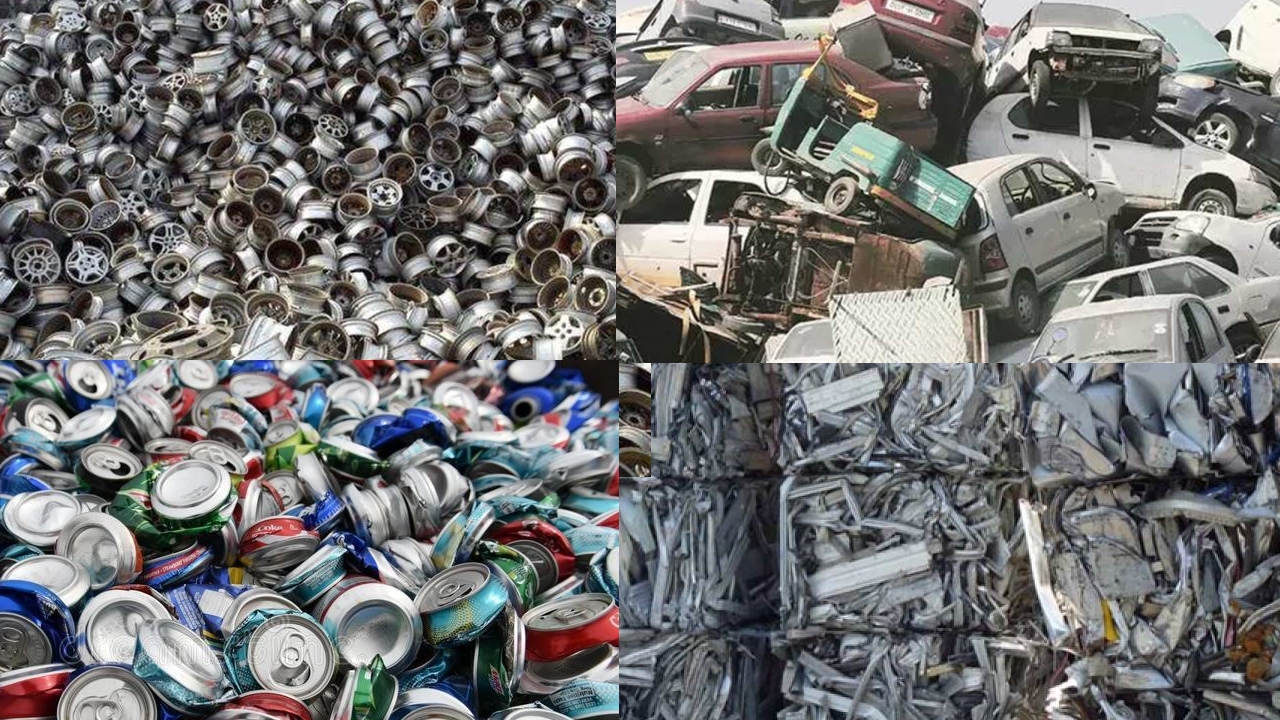
Indian non-ferrous metal manufacturers absorbed a structural cost shock in January–March 2026: raw material expenses across listed private manufacturing firms rose 18.3% year on year against revenue growth of only 14.5%, compressing operating margins by an estimated 200–350 basis points (bps hundredths of a percentage point, the standard unit for measuring margin changes) at the sector level. The Reserve Bank of India's quarterly survey of 3,266 listed non-government non-financial companies, released 17 June 2026, confirmed that non-ferrous metals was among the top contributors to manufacturing's accelerated 14.5% sales growth. That headline looks strong. But the mechanism behind it matters: a significant portion of that revenue acceleration almost certainly reflects pass-through of higher London Metal Exchange (LME) benchmark prices the globally traded reference prices for aluminium, copper, zinc, and lead into customer invoices, rather than genuine volume growth. Strip out the price inflation, and the underlying demand signal becomes considerably less clear.
The raw material to sales ratio the share of every rupee of revenue consumed by input costs rose to 58.5% in Q4 FY26 from lower levels in preceding quarters. For a non-ferrous metal producer, the key inputs are metal concentrates, scrap, energy, and chemical reagents, most of which are priced directly or indirectly against LME benchmarks or international energy indices. Consider a mid-sized Indian copper rod manufacturer processing 5,000 tonnes per month. At a raw material ratio of 58.5%, input costs consume roughly ₹58,500 of every ₹100,000 in sales. If LME copper rises 12% and the company passes through only 10% to customers a realistic friction in fixed-term supply contracts the gap between input cost inflation and revenue recovery widens immediately. Operating profit growth for manufacturing moderated to 9.4% in Q4 FY26 from 11.8% in the prior quarter, even as the interest coverage ratio (the multiple by which operating earnings exceed interest payments a measure of debt-service comfort) improved to 9.5 from 9.0, suggesting companies are not yet in financial distress, but are absorbing margin erosion through operating efficiency rather than pricing power.
On the buy side, Indian electrical machinery and non-ferrous fabrication companies the firms purchasing copper cathode, aluminium ingot, and zinc slab as production inputs face the sharpest near-term pressure. Their procurement teams are contracting into a market where benchmark prices are elevated and the RBI data confirms their own sector's cost base is rising faster than their revenue recovery. For large integrated manufacturers with derivatives access a Hindalco, a Vedanta, a Sterlite the standard instrument is an LME forward hedge: locking in input prices three to six months out at current levels, accepting today's margin rather than gambling on a further rise. The cost of a six-month copper forward at current LME volatility levels runs roughly $8–12 per tonne in option premium manageable against a margin that, while compressed, remains positive. For a smaller regional cable manufacturer or independent wire drawing operation without derivatives access, the practical equivalent is lengthening physical inventory cover: contracting two to three months of forward supply bilaterally with a domestic distributor at a fixed price, accepting a modest premium over spot in exchange for cost certainty.
On the sell side, LME-linked metal exporters supplying Indian buyers Australian copper concentrate shippers, South American zinc miners, Southeast Asian aluminium smelters are in a structurally advantaged position right now. Indian import demand for non-ferrous inputs remains robust: the RBI sales data confirms the downstream manufacturing sector is running at elevated activity levels, and the 14.5% manufacturing sales growth figure, whatever its price volume composition, reflects real production throughput. A trader or commodity house positioned between an LME-linked international supplier and an Indian non-ferrous manufacturer is capturing margin from both sides: buying at benchmark-linked prices and selling into a market where Indian buyers have limited leverage on pricing. The risk on the sell side is a correction. If LME prices soften aluminium has already retreated roughly 8% from its February 2026 highs on demand uncertainty from China Indian buyers' revenue base contracts faster than their input costs, because long-term purchase contracts lag spot moves on the downside. The revenue-cost scissor can run in reverse quickly.
For observers tracking this market, the signal to watch is the monthly LME three-month forward price for copper and aluminium, released daily but most actionable on the first Monday of each calendar month when Indian smelters and fabricators typically review quarterly procurement positions. A sustained move above $10,500/tonne for LME copper currently trading near $9,800/tonne would indicate a further round of input cost inflation arriving into Indian manufacturers' Q1 FY27 books, before any revenue pass-through is possible. Equally important: watch the RBI's next quarterly corporate performance survey, due approximately September 2026 for the April–June quarter, for whether the raw material to sales ratio holds at 58.5% or rises further. If it crosses 60%, that is the threshold at which historical RBI data shows operating profit growth for Indian manufacturing has tended to turn negative not merely moderate. That crossing would mark the difference between a temporary margin squeeze and a structural repricing of Indian non-ferrous production economics.




'%3e%3cg id='Final-Copy-2_2_' transform='translate(1275.000000, 200.000000)'%3e%3cpath class='st0' d='M7.4,12.8h6.8l3.1-11.6H7.4C4.2,1.2,1.6,3.8,1.6,7S4.2,12.8,7.4,12.8z'/%3e%3c/g%3e%3c/g%3e%3c/g%3e%3cg id='final---dec.11-2020'%3e%3cg id='_x30_208-our-toggle' transform='translate(-1275.000000, -200.000000)'%3e%3cg id='Final-Copy-2' transform='translate(1275.000000, 200.000000)'%3e%3cpath class='st1' d='M22.6,0H7.4c-3.9,0-7,3.1-7,7s3.1,7,7,7h15.2c3.9,0,7-3.1,7-7S26.4,0,22.6,0z M1.6,7c0-3.2,2.6-5.8,5.8-5.8 h9.9l-3.1,11.6H7.4C4.2,12.8,1.6,10.2,1.6,7z'/%3e%3cpath id='x' class='st2' d='M24.6,4c0.2,0.2,0.2,0.6,0,0.8l0,0L22.5,7l2.2,2.2c0.2,0.2,0.2,0.6,0,0.8c-0.2,0.2-0.6,0.2-0.8,0 l0,0l-2.2-2.2L19.5,10c-0.2,0.2-0.6,0.2-0.8,0c-0.2-0.2-0.2-0.6,0-0.8l0,0L20.8,7l-2.2-2.2c-0.2-0.2-0.2-0.6,0-0.8 c0.2-0.2,0.6-0.2,0.8,0l0,0l2.2,2.2L23.8,4C24,3.8,24.4,3.8,24.6,4z'/%3e%3cpath id='y' class='st3' d='M12.7,4.1c0.2,0.2,0.3,0.6,0.1,0.8l0,0L8.6,9.8C8.5,9.9,8.4,10,8.3,10c-0.2,0.1-0.5,0.1-0.7-0.1l0,0 L5.4,7.7c-0.2-0.2-0.2-0.6,0-0.8c0.2-0.2,0.6-0.2,0.8,0l0,0L8,8.6l3.8-4.5C12,3.9,12.4,3.9,12.7,4.1z'/%3e%3c/g%3e%3c/g%3e%3c/g%3e%3c/g%3e%3c/svg%3e) Privacy Choices
Privacy Choices